Introduction to the user needs for news

User needs are exactly that: needs your users have when they come to your website to consume online news.

Why do people come to your website? What information are they looking for? What don’t they know? What would they like to find out? It’s an interesting framing of the relationship between newsroom and news consumer because it recognises that this relationship has shifted.

When the source for this information was limited by the schedule set by media organisations (the 10 o’clock news) or format (the morning paper) that was fine. Now, though, updates appear as if by osmosis, every second of every day, via chats and messages, social media and push notifications - and that’s before you even open a news app or website. Audiences aren’t waiting for news - it appears on demand, and they’re the ones demanding it.

Four axes, eight user needs

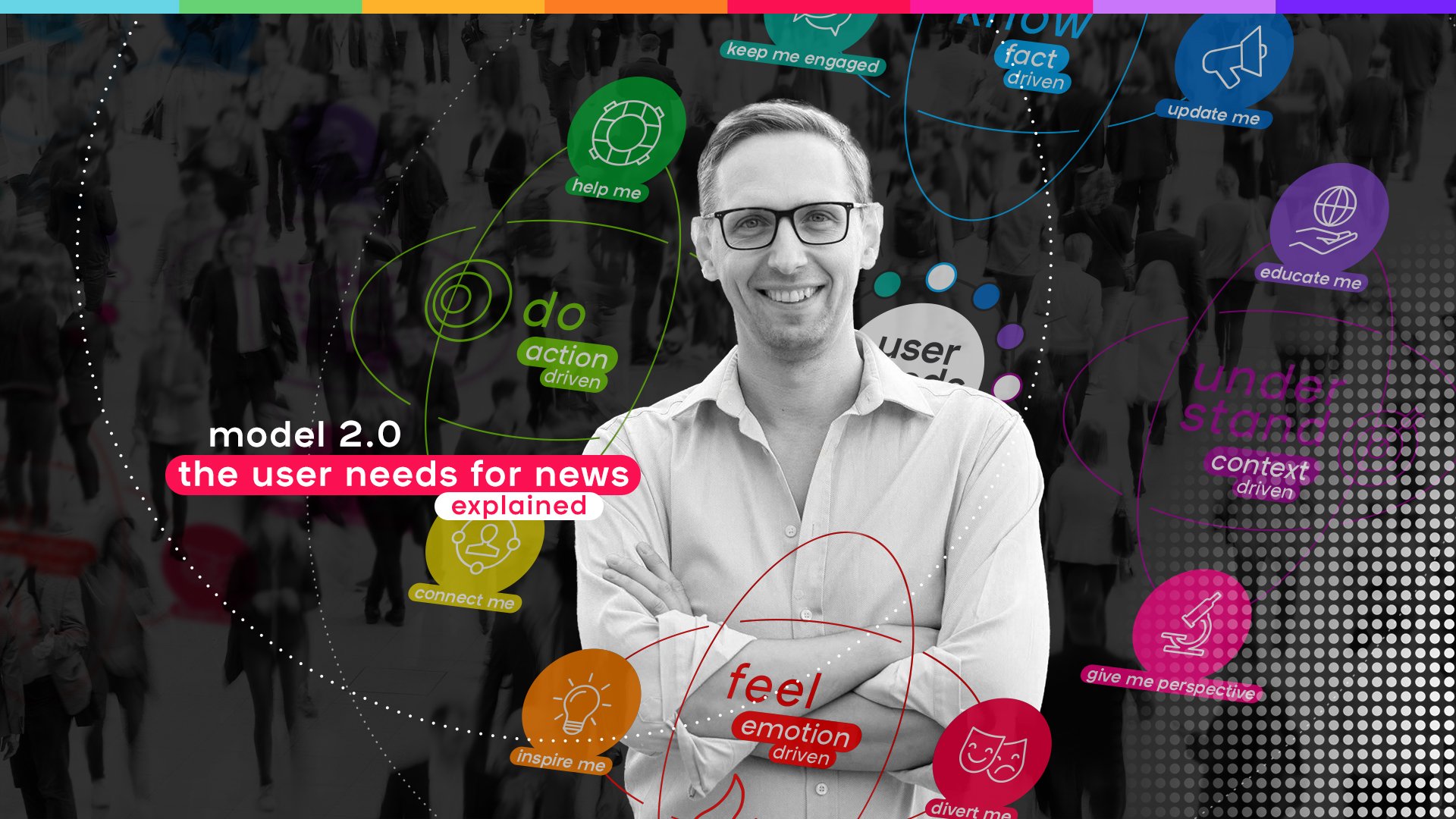
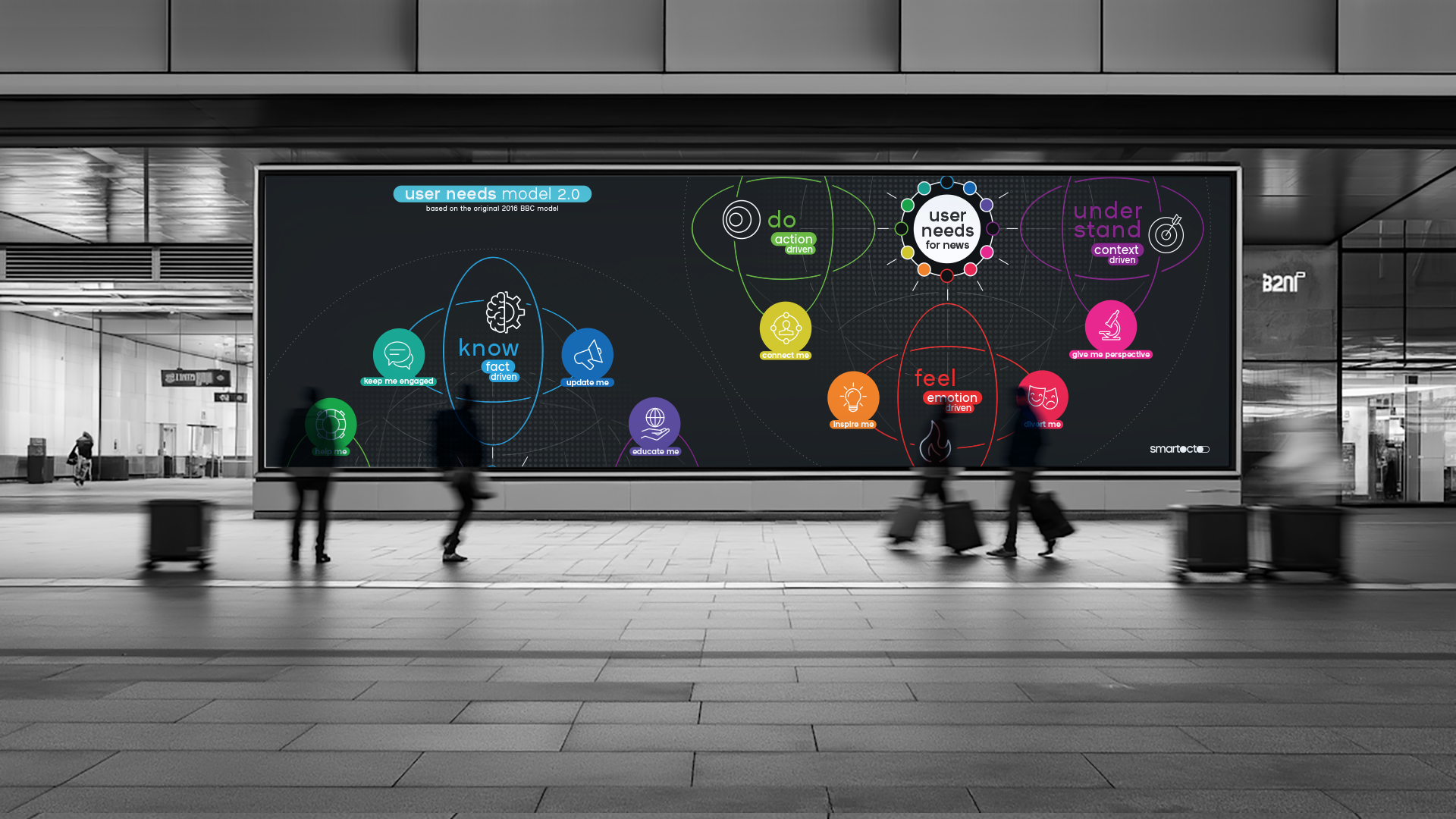
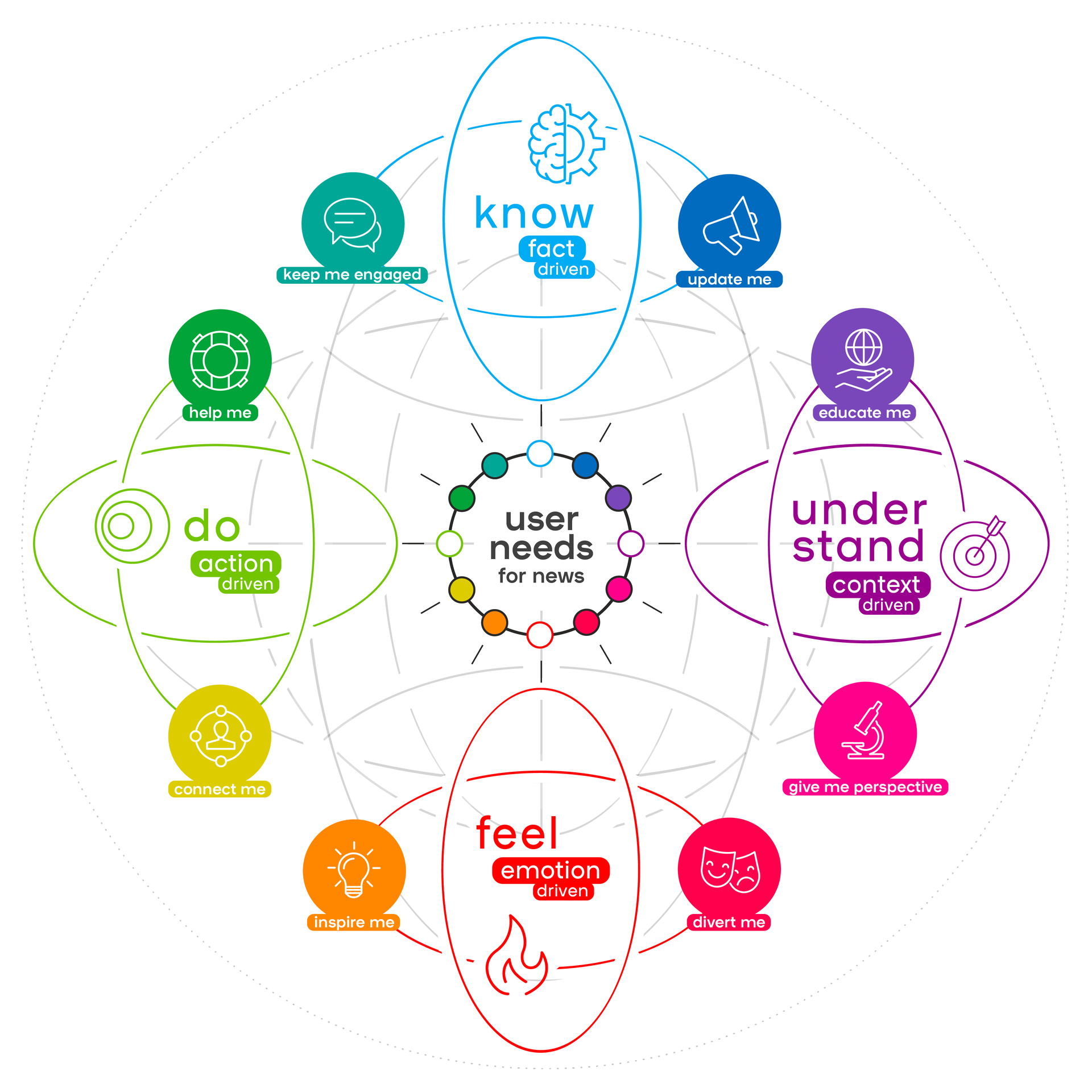
The User Needs Model 2.0 is built around four axes: the four main drivers for why people consume news.

Two universal user needs sit under each axis. These have been defined and shaped by our own research (and by news brands like yours) and we've distilled multiple ideas down to create eight universal user needs.
User Needs Model 2.0

More than news updates

Most news seeks to Update. That’s fine - and it is historically what news was designed for anyway. What’s new? What’s happening?

But the User Needs Model gives you more opportunities for story angles than ‘Update me’.

The BBC World Service was the first to publish groundbreaking research on user needs back in 2017. What did they find? Seventy percent of their output fell into this ‘Update me’ category, but accounted for only seven percent of website visits.

Other publishers soon found similar stories in their own data. And, critically, they discovered that not only did other user needs have a much, much better return on investment than those more traditionally-formulated, but organising content strategy around this framework helps newsrooms to strengthen their connection with audiences.

  • 2017 BBC World Service published initial research into user needs for newsrooms
  • 2023 smartocto & Dmitry Shishkin (ex-BBC) co-author a whitepaper and introduce User Needs 2.0 - a universal user needs framework
  • 2024 Reuters Institute for the Study of Journalism identifies this framework as transformative for newsrooms in their Digital News Report

Further distillation is possible (and encouraged!), but these are an excellent place to start.

What do people want from news?

Modern audiences are discerning and demanding.

This is in fact a Good Thing.

The universal user needs identify 8 things people want from news. These are:

  • Update me: This is a typical news article that states the facts, answering the questions: 'what has happened?' and 'what are the details?'
  • Educate me: This may be the most important user need, because it helps readers to learn more about a certain topic or event, fuel their curiosity or understand the basics of a complicated subject. That makes these types of stories very valuable for the reader.
  • Give me perspective: With certain news events, it can be difficult for the average person to really determine what it actually means and how it can influence them. That's why stories answering the 'Give me perspective' need are filled with opinions and quotes from analysts and experts, as they unpack a complex argument.
  • Divert me: 'Divert me' pieces are meant to take your mind off the often negative flow of news, literally diverting your thoughts with something funny, exciting or entertaining. People need to be given something to distract themselves with: they can't consume ‘hard news’ all the time or they'll lose interest altogether.
  • Inspire me: 'Inspire me' pieces are designed to leave you with a good feeling. These are often stories about people who achieve something significant against all odds: interesting people doing inspiring or surprising things. But it may also be so-called ‘solution journalism’, which offers possible solutions or a positive twist to certain events.
  • Help me: This user need is action-driven and stems from the trend of service journalism. From the motivation of your readers it means that your visitors are searching for information that helps them act on a personal level. Sometimes it is enough to show the impact of developing events, as long as they encourage your audience to do something.
  • Connect me: This user need is action driven, but it does lean a little bit towards the emotion of your audience. Your audience wants to feel connected and at the same time feel the urge to act on that feeling. The stories created with this approach will connect people around ideas or experiences. In many cases these stories build empathy or affinity with the subject or topic.
  • Keep me engaged: This user need focuses on the importance of staying up to date with the current events and participating in the conversation and discussions surrounding them. It places an emphasis on the desire for not just being a passive consumer of information, but an active participant in the community. ‘Keep me engaged’ takes into consideration a broader scope of trends, not just those limited to social media. The focus should be on making it easier for the users to participate in the conversation.
Blog: the user needs for news model 2.0 explained

Read more explanation of all user needs in this blog.

(Yes! An ‘Educate me’ article in optima forma!)