Introducing a new tool or way of working is always challenging. That’s just the way it is. But it’s also true that access to the insights those new tools offer can be game-changing. So how do you make this transition sticky - and permanent?

At Mediengruppe Oberfranken, they’ve successfully implemented smartocto. Theirs isn’t a huge team, but they’re seeing results that have made this process worthwhile. Here’s how they did it.

  • Client: Mediengruppe Oberfranken (MGO), a regional media group in Oberfranken, Germany.
  • Publications: Fränkischer Tag, Coburger Tageblatt, Bayerische Rundschau and Saale-Zeitung - all part of Mediengruppe Oberfranken and published digitally at fraekenkischertag.de
  • Location/Size: Based in Bamberg and surrounding smaller, less urban regional cities. A smaller newsroom (70 staff) with a strong focus on local interest content.
  • Smartocto User: Moritz Kircher, Editor for Content Management and AI.

The challenge

Fränkischer Tag, like many regional outlets, faces the challenge of growing its digital subscription base and retaining loyal readers (reducing churn). Their main issues included:

  • Shifting mindset

Moving the editorial team away from traditional, broadcast-era metrics like Page views (which often come from non-converting users via referrals like Google Discover) to metrics that measure genuine reader engagement and loyalty.

  • Tool adoption

Integrating a new analytics platform (smartocto) into the newsroom workflow and ensuring buy-in from all journalists.

  • Strategic data use

Identifying which content truly drives new subscriptions versus just providing high reach, especially within a regional newsroom with limited personnel.

The solution: a data-informed, bottom-up approach

The newsroom implemented smartocto Insights and smartocto Real time with a strategy focused on subscription loyalty and internal adoption.

  • Bottom-up integration

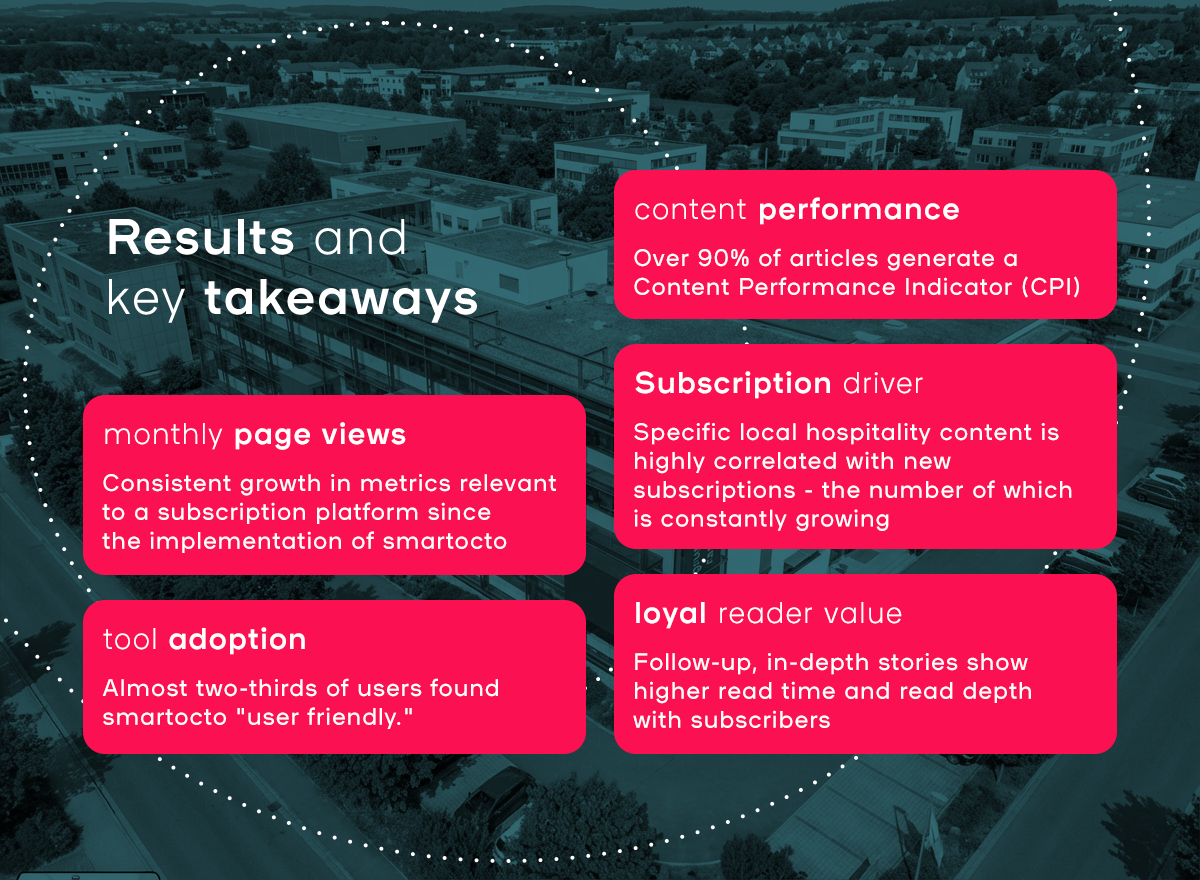
To maximise the chance of a smooth transition into the newsroom, the new tool was introduced using a "bottom-up" approach. A small test team provided feedback, and feedback was positive, showing high praise for the tool’s user-friendly interface and newsroom-orientated design. Once this was done, more widespread adoption could take place.

  • Focus on value metrics

The team began working to shift focus away from "page views" to subscription-aligned metrics:

  • Article Reads: Defined as a user staying on an article for at least 10 seconds, this metric better indicates genuine interest and a chance for conversion, unlike a simple page view.
  • Content Performance Indicator (CPI): smartocto’s powerful compound metric giving an overall view of success. Although there was a concern that Fränkischer Tag wouldn’t have sufficient reach to be able to utilise this, in fact 90% of the newsroom's articles were able to be measured in this way.

Strategic frameworks

The newsroom leveraged editorial analytics frameworks:

  • User needs model

Used to categorise content, notably identifying "Update me" and “Divert me” stories (especially those addressing hospitality-type stories) as a key subscription driver.

  • Quadrant model

Recently implemented to visually analyse story performance based on a combination of reach and loyalty metrics, helping editorial heads discuss and strategise around "niche topics" and "reach champions."

  • Workflow integration

Customised Insights reports are delivered daily/weekly to specific regional teams (e.g., Bamberg vs. Kronach) to inform their daily news-flash meetings. Real-time notifications were limited to 30-40 (what the team deemed to be an optimal number) to prevent overwhelming journalists.
Results and key takeaways

Results and key takeaways at Fränkischer Tag

Moritz’s advice for other smaller newsrooms

My advice would be not to design the process of installing a new tool from top down, but from the bottom up. So, let your journalists and editors test the new tool. Ask them for their opinion. If they’re comfortable and happy, it’s going to be a whole lot easier to implement - and you’ll get the buy-in from the team that you really need. The User Needs approach is easy to adopt by the journalists in your team. And it boosts the quality of your content.

Moritz Kircher Digital editor & content manager

The Fränkischer Tag case demonstrates that even a smaller regional newsroom can successfully leverage sophisticated editorial analytics, provided they:

  1. Focus on a bottom-up integration strategy.
  2. Curate notifications to suit your people and to prevent overwhelm (Moritz recommends selecting somewhere in the region of 30-40 out of over 100 options)
  3. Prioritise metrics and tools (like the Quadrant Model and Article Reads) that measure subscriber loyalty and satisfaction over pure reach.