At the invitation of De Gelderlander, smartocto spent half a day inside the newsroom to find out what happens when a publisher takes both data and the user needs for news really, really seriously. The answer? A surprisingly disciplined kind of creativity. And results that are hard to ignore.

Journalists, at heart, are story hunters. That much is clear during the morning meeting of executive editors and the editor in chief of De Gelderlander in Nijmegen, led by deputy editor Niki van der Naald.

Just a handful of story options that are touched upon in the morning meeting:


“Do we know who was behind the fires on three churches in Ede?”
“Who’s on the shooting in Arnhem?”
“We have a preview on stolen cooking oil. Court case this afternoon. Apparently it is a trend in Belgium and Germany.”
“Drone footage of the flooding is still coming in.”
“A landowner found a swastika mown into his field. No idea who did it.”
“Can we speak to the owner of that burnt out Ferrari? The first piece did very well in Octo. This could be another hit.”
“A deer jumped through the window of a commercial building.”
Newsrooms are naturally story focused.
Newsrooms are naturally story focused. © Willem-Joop Lagarde

“Good heavens, that must have been a shock,” says the editor in chief Joris Gerritsen about the deer. “Poor thing,” replies section chief editor Sjors Moolenaar.

In other words, a meeting much like countless others. Fast, curious, instinctive. Yet what follows shows why this newsroom has moved ahead of many of its peers.

The modern newsroom looks different from its predecessor of fifteen years ago. Alongside reporters sit online specialists, a premium team, a homepage editor and a data analyst. Stories are written first and foremost for digital. The print edition is assembled elsewhere.

A long history, a modern machine

Founded 177 years ago, De Gelderlander now has 109k subscribers and draws 2.5 million online visitors each month - more than some national titles. Around 100 journalists and designers produce fourteen regional editions, covering a broad swathe of the eastern Netherlands. The paper is part of DPG Media, the leading Belgian-Dutch publishing group for newspapers, magazines and digital services across both countries.

In the minutes and hours after the meeting, Anita van Rootselaar from the premium team turns discussion into structure. She builds the online schedule. And through it all runs the thread of audience centricity; of infusing content with intention of the writers with expectations and needs of their readers.

What’s happening at De Gelderlander is fascinating because it shows what happens when the framework of user needs is integrated into the language and planning and workflow of everything.

Balance is the watchword. Timing is everything. Data is the guide.

Anita van Rootselaar from the premium team: “Especially at peak times, early morning, lunchtime, early evening, we need the right mix live,” she says.

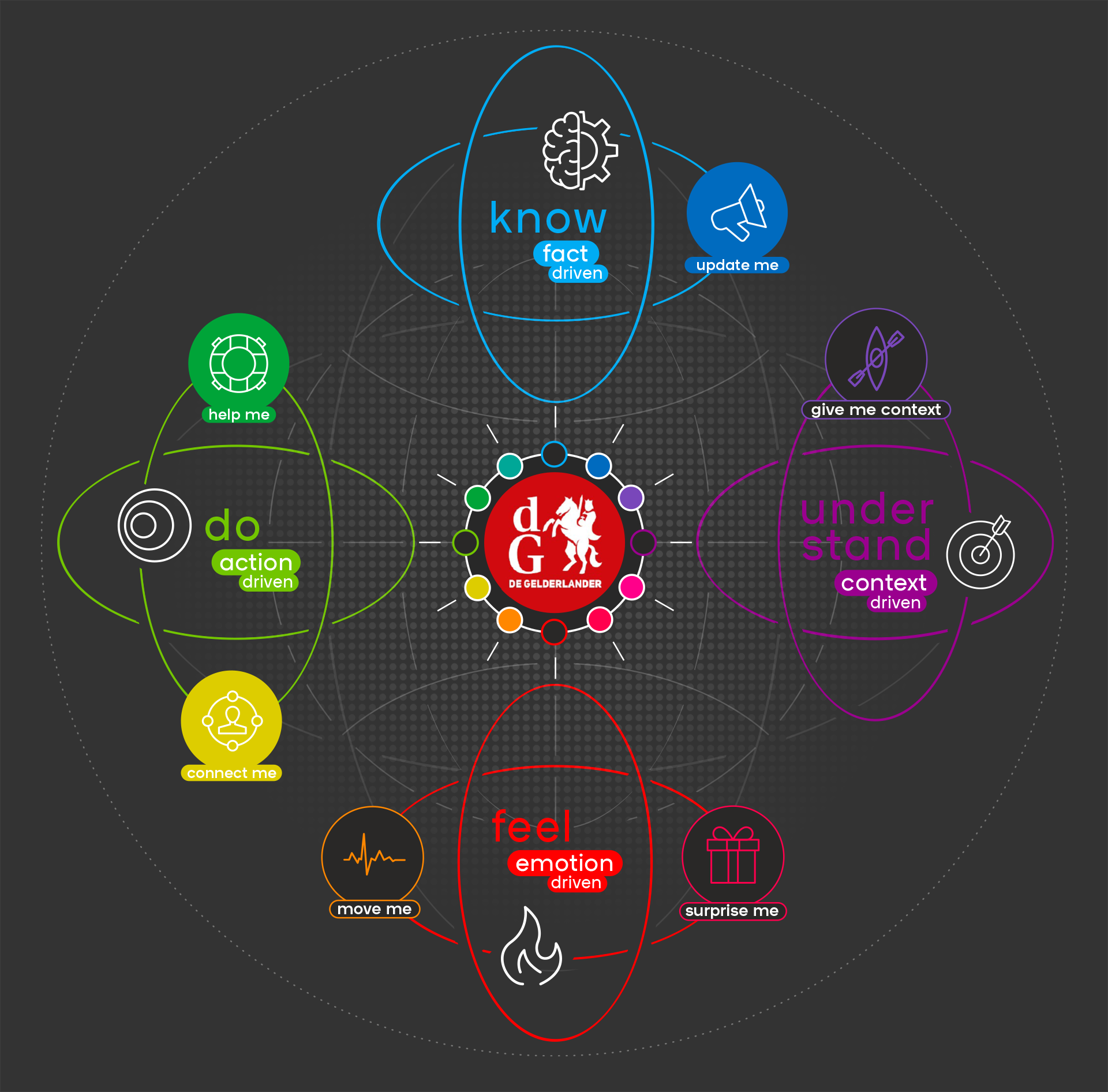
In her spreadsheet, each story is assigned a user need. The publisher has selected a set that suits its regional brands:


Move me
Connect me
Surprise me
Help me
Give me context
Update me

The user needs model of De Gelderlander.

Balance is the watchword

This balancing act goes further.

There must be enough premium pieces behind the paywall on the homepage. Smartocto sends a warning if that balance slips. If traffic softens, an open article may move to the top spot.

The homepage should reflect different parts of the region, too.

Joost de Poel, who describes his job simply as “I am the home”, has three smartocto dashboards open. In the newsroom they call it Octo, as if it were a cheerful pet watching over proceedings.

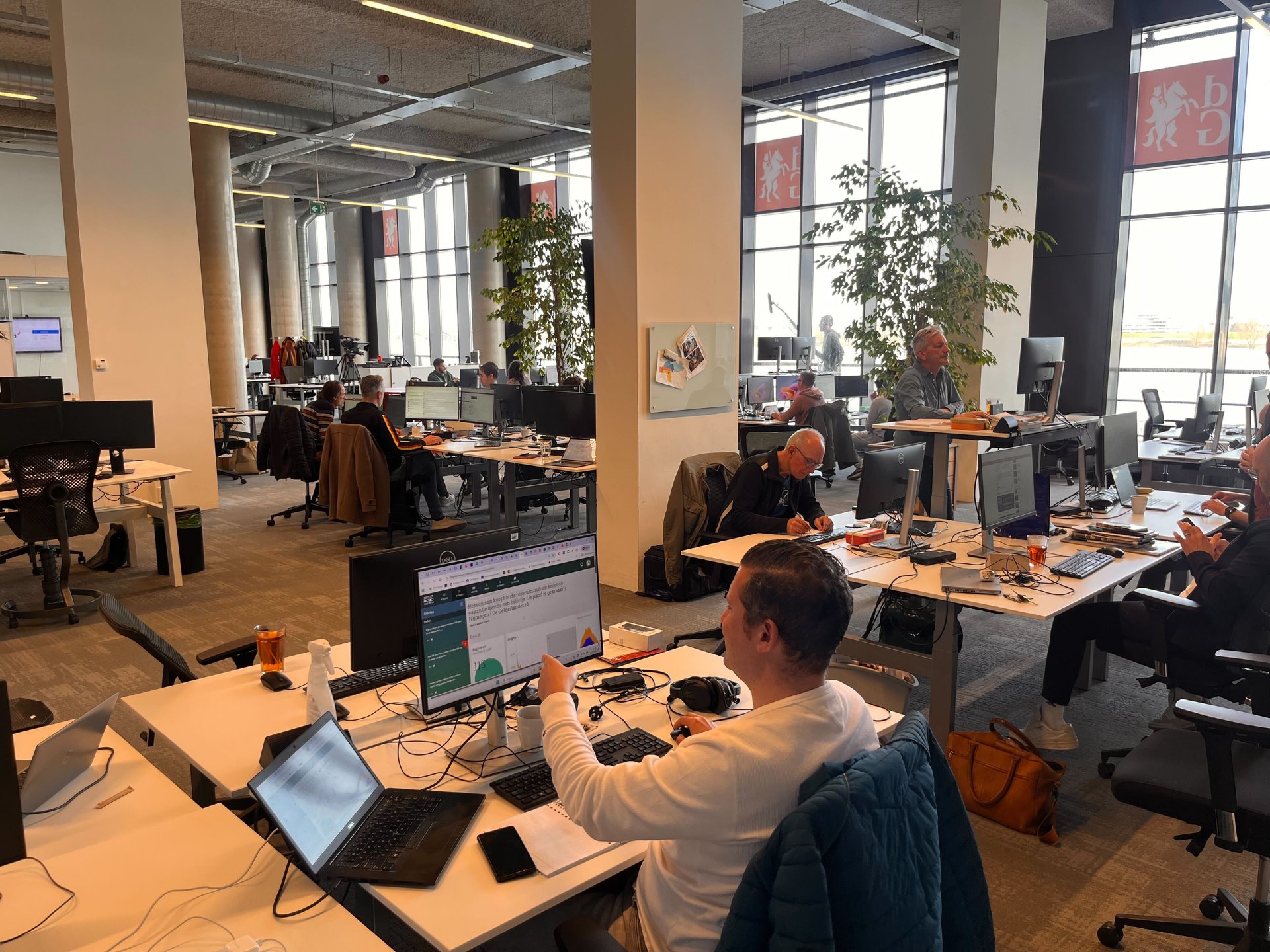
The headquarters newsroom of De Gelderlander, in Nijmegen, where they call the smartocto dashboards ‘Octo’.

Joost decides what lands on the homepage and where.

He scans the spread of user needs and shows me an article. “This one is clearly a Move me piece. I might ask the premium team to tweak the image and run a photo test.”

De Poel is also mindful of balance in terms of who stories are appealing to: the data tells the team that some stories tend to skew male or female. Six stories on sport, business and war at the top? The data suggests that would narrow the appeal towards men only. They don’t want that.

PRO TIP: Build a train of four stories

A well placed emotional story at a peak moment tends to lift everything around it. Readers come for one reason, stay for others. If the mix is right, they find themselves served across their full range of needs.

“Take the Ferrari story. First comes an Update me. Then a Move me one, hopefully with the owner. After that, context about how it happened. And finally perhaps a Help me, for example where not to park your car, or something like that. We have to think about that every single time.”

  • Sjors Moolenaar, section chief editor

Reporters now set out with a loose plan shaped by both experience and data. It can still change. One journalist visited a holiday cottage known for exceptional reviews. The angle was ‘Surprise me’: what is the secret? Instead, the reporter returned with a deeply personal story. The owner was seriously ill. It became a ‘Move me’. The framework holds, but reality still leads.

Timing is everything

Anita appears. It is nearly 11.00.

“What do you still need before noon?”

“A strong Move me. Do we know if the Ferrari owner will respond?”

One dashboard flags stories performing strongly despite not having the benefit of prominent placement. “Then I can give them a chance on the homepage,” he says.

At the same time, a national story arriving from a central desk starts climbing fast. “I can push that shortly,” De Poel notes as he looks at his watch. It will send out a notification to at least tens of thousands of phones.

Data is the guide

Enter Leon van Wijngaarden, the data analyst. This position is a relatively new one in traditional newsrooms, but here the executive editors tell that it’s now indispensable. The data analyst, for example, studies what drives readers. Throughout the day he offers guidance, often framed explicitly around user needs.

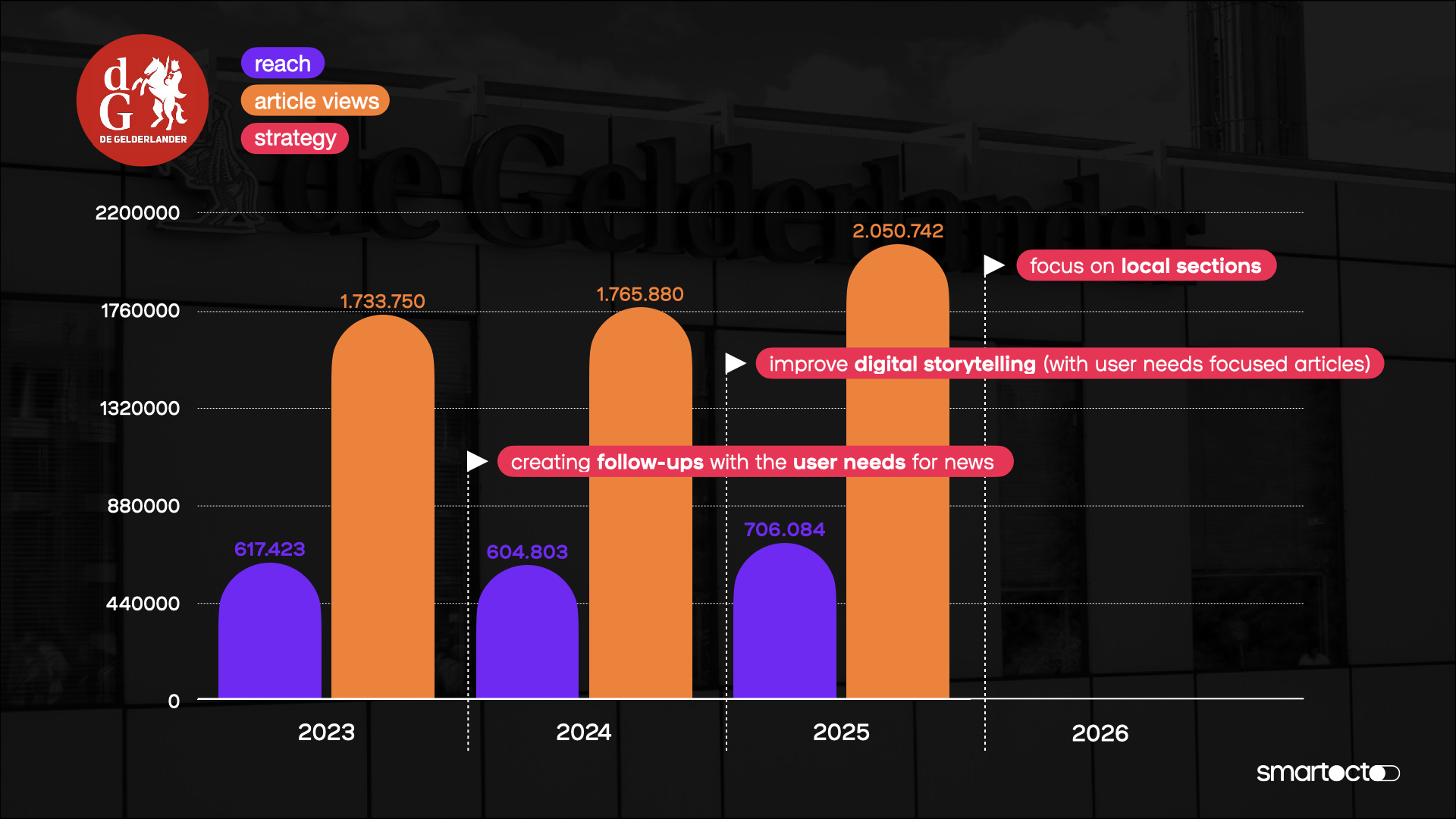
Does their strategy work? Well, while a lot of news websites struggle post Covid, De Gelderlander is growing in reach and article views.

Smartocto in action: why aligning need, headline and content matters

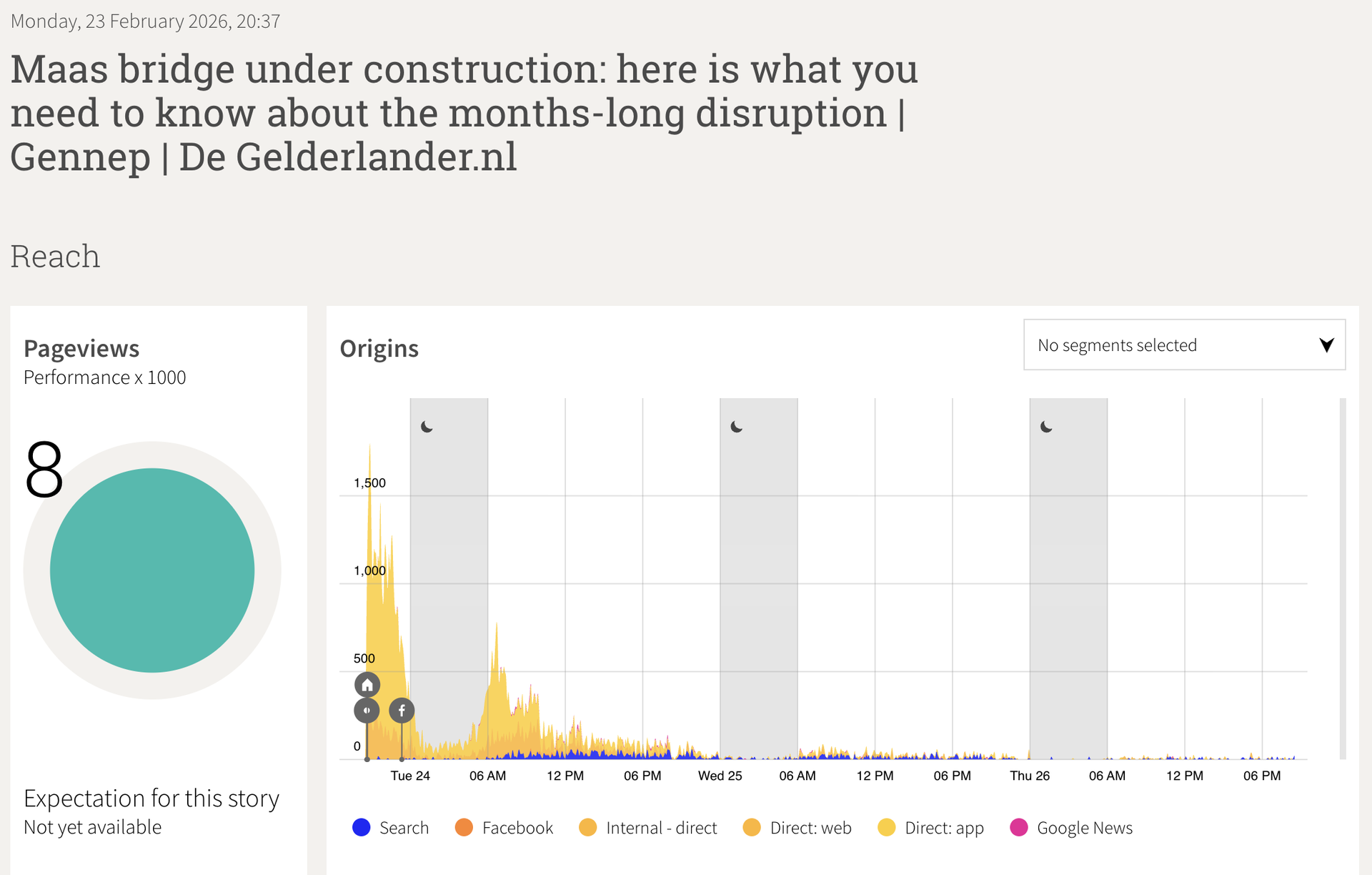
The team published an article about an excavator that crashed into a bridge. The story attracted a lot of clicks, but weak reading time. "For us, what matters is that readers are satisfied with the article they're reading. The story about the bridge was largely or fully read by 25 percent of logged-in readers. We felt there was room for improvement," says data analyst Leon van Wijngaarden.

The reason? Too much information, is the analysis. In this instance, readers expected a straightforward Update me. Instead they received context and detail in abundance.

"The headline and intro pointed them in one direction," says Sjors Moolenaar. "The story delivered something else."

So they recalibrated. A new piece focused squarely on consequences: what the bridge closure meant for months to come. "This second piece, clearly framed around context, was largely or fully read by 37 percent of logged-in readers. The clarity resulted in higher reading quality," concludes Van Wijngaarden.

Understanding what your audience wants

For online chief editor Janko van Sloten, data is not decoration but discipline. “You have to learn the game,” he says. “It is about balance and pacing. If several stories are already flying, do not immediately throw another big one on top. Hold it back. At some point you hit a ceiling. Readers have limited attention. We need to manage it.”

The goal is not a frenzy of clicks. “Appreciation matters more than raw reach,” Janko argues. The team prefers article views to simple clicks, as they signal that readers continue beyond the first headline. Loyalty click through rate is tracked closely. Are people really reading?

Leon van Wijngaarden keeps a watchful eye. “Mainly at times when article views are under target, I open some dashboards multiple times an hour to understand what's going on. If I see little reading time, the mix might be too narrow. Then I suggest adding a different type of story. In the end, we want satisfied visitors.”

In this newsroom, instinct still sparks the hunt. But it is data, carefully applied, that turns the catch into a strategy.