Over the past five years, we have created more than 150 bespoke reports for newsrooms and other media-centric publishers. These reports provide a snapshot of what’s being published, what’s resonating with audiences - and what isn’t.

Some of these reports are for international titles with multiple offices, countless personnel and big budgets. Others are for hyper-local publishers, operating at a grassroots level, and with minimal staff. Then there have been non-profits, content marketing companies and sports media brands. They’re located across all continents (though not, it should be noted, Antarctica). They are, in short, diverse in their purpose, place and people.

Each of these reports are interesting in their own right, as they should be: laden with insights editors can ponder and do something about.

But in creating these reports, we started noticing something really interesting. The fact is that although reports are generated with eyes focused only on company performance and with no insight of what’s happening in other publishing houses, there are certain things that we are seeing time and time again.

It’s this: there is simply too much fact-driven content being published.

And, more than this: there is too much fact-driven content being published and readers simply aren’t reading it.
The findings

The original trigger: BBC Worldwide

It’s a rhythmically pleasing soundbyte: 70% of content produced at BBC Worldwide, generated only 7% of article reads. This imbalance not only launched but super-charged the user needs framework - a system designed to ensure that planning, writing and publishing is audience-centric to the core. At smartocto, where we further developed and refined this model into what we call User Needs 2.0, our findings (available in a downloadable whitepaper) showed a very similar story. Across all markets and publishers, 70% of content brings in just 10% of reach - and the dominant user need in that 70% was that which is categorised as ‘Update me’ (fact-based).

Supplementary evidence: Omroep West

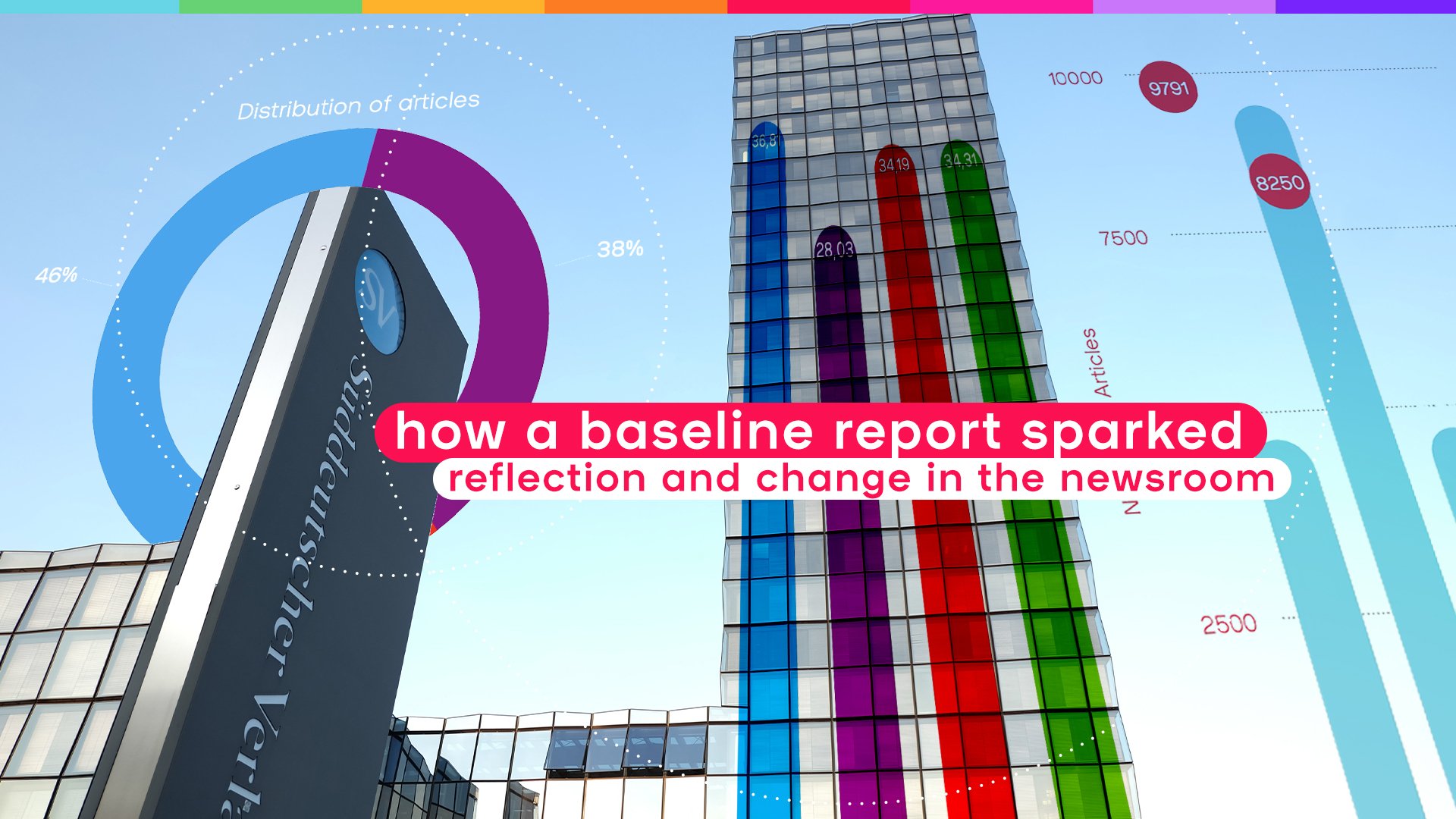
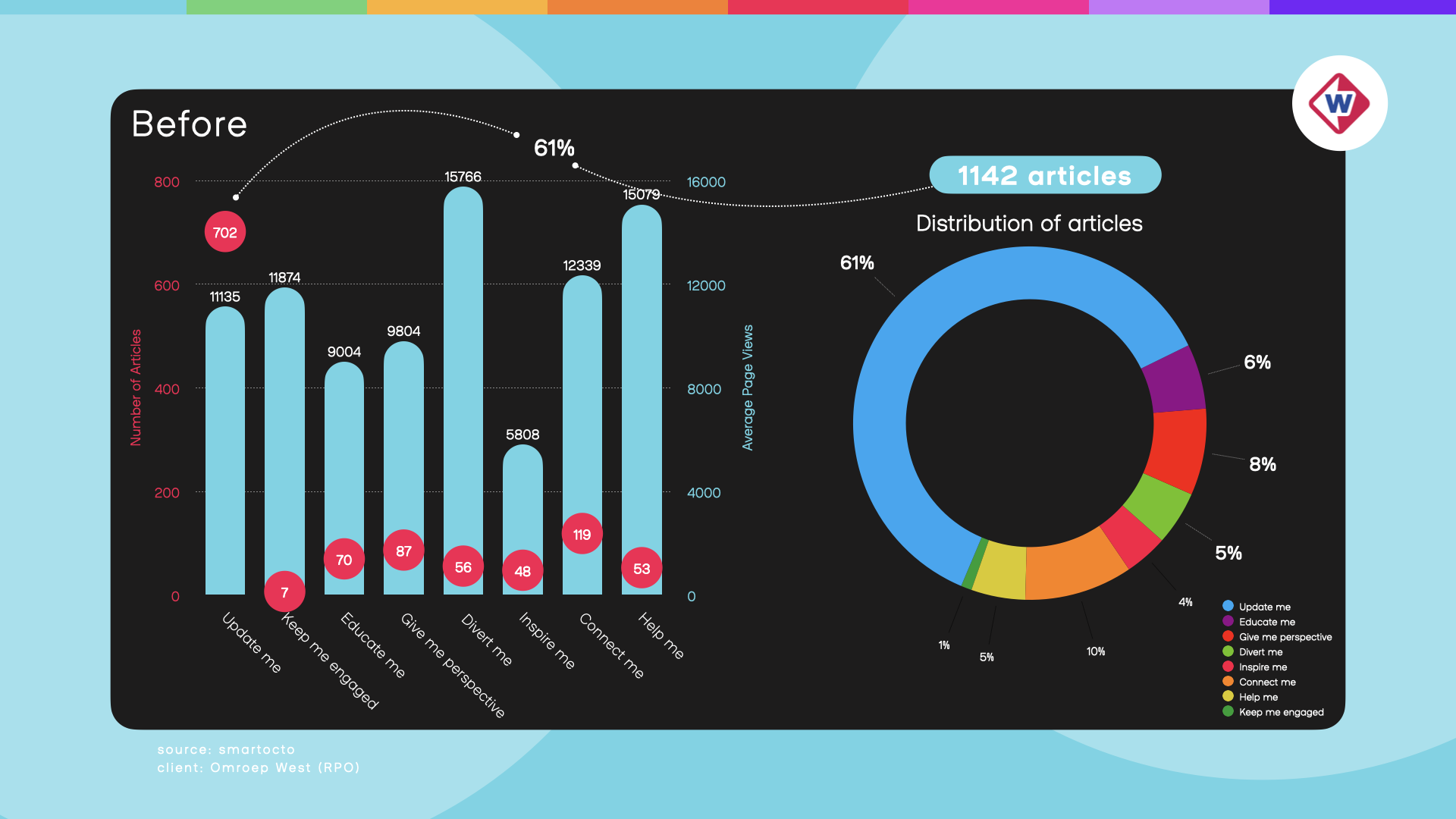
A baseline report for Dutch media company Omroep West (June 2025) showed that 61% of its published articles were what we would class as ‘Update me’. Following this baseline report, they managed to address the imbalance across the various user needs - resulting in their lowering of Update Me articles to 55% of their total output, post-report. This 6% reduction not only meant more space for different editorial approaches, but also rewarded the team with a 14% increase in page views across the site, a 4% increase in average attention time.

Is it just news media?

In short. No.

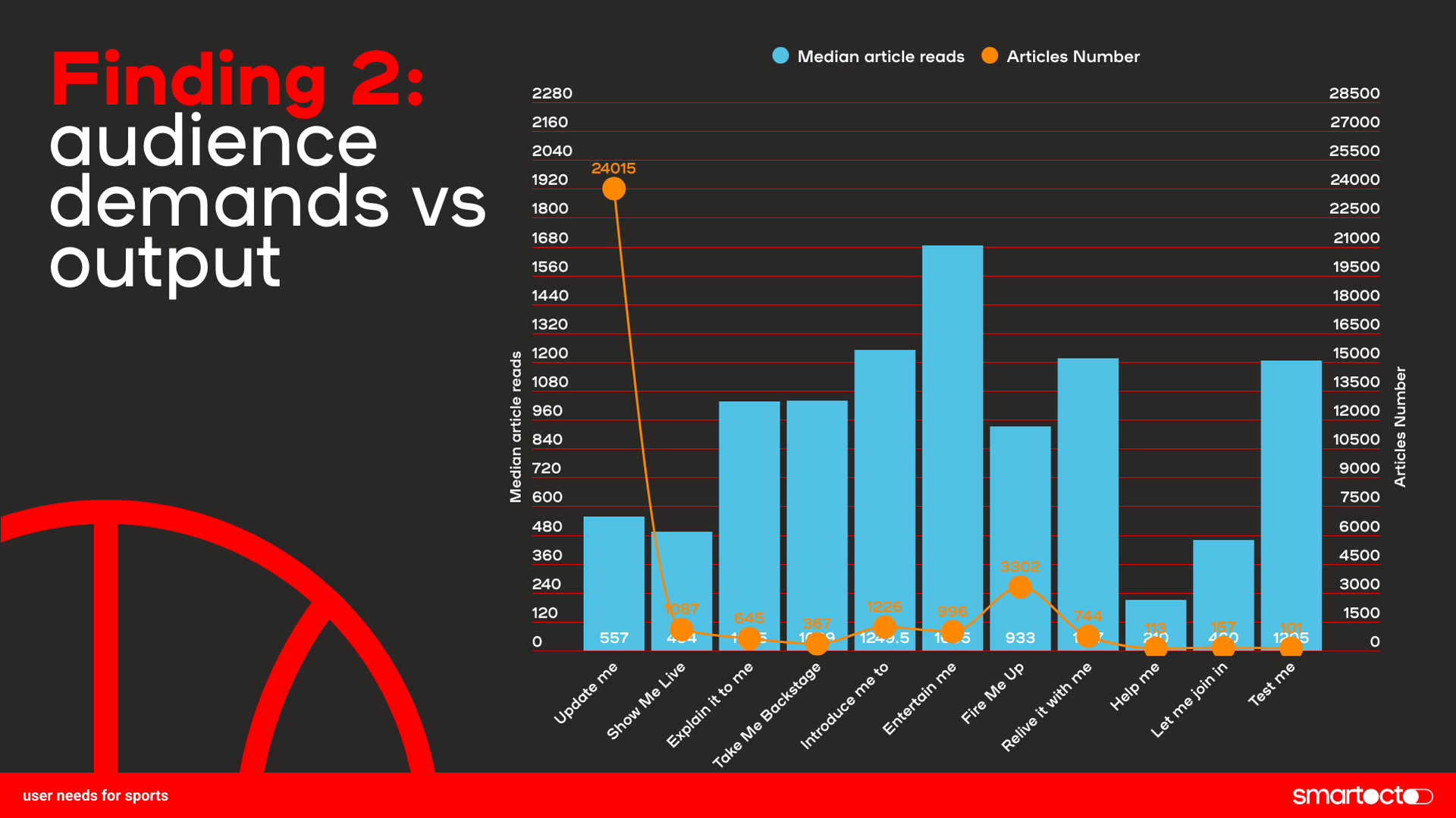
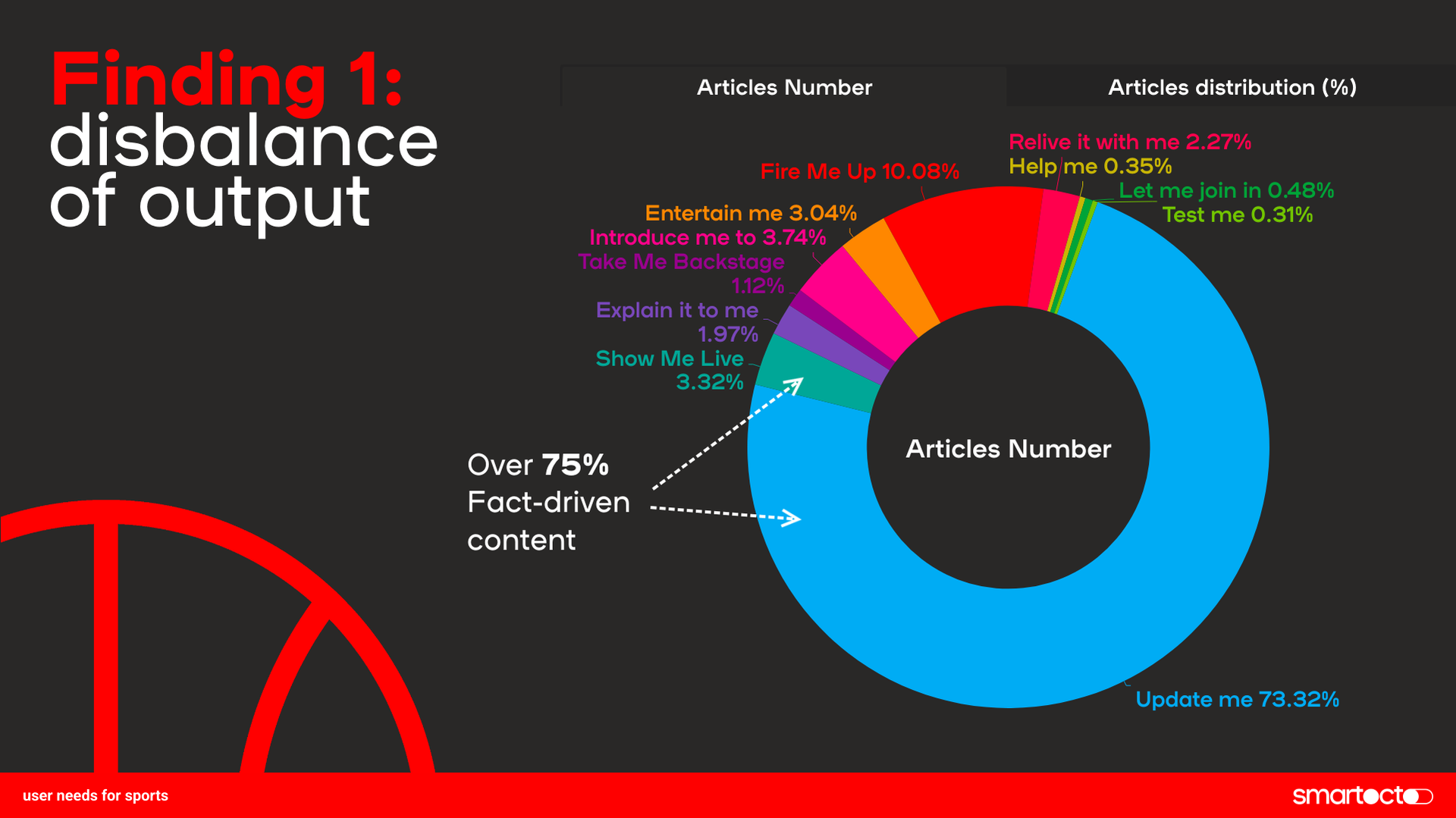
Over the past few months we’ve been analysing data for sports publications and sections as we prepare to roll out user needs support for sports publishers. A large-scale analysis of sports-centric publications revealed a very similar story:

Here, 75% of published content was deemed ‘fact-driven’. Again, this might not be significant were it not for the companion finding: that article reads were significantly higher for other kinds of content published.

The explanation

News is fundamentally about providing updates, but the traditional approach to delivery must be urgently reconsidered. Just as educational theory has evolved, so too have audience needs changed irreversibly. People are no longer primarily seeking mere facts, which can often be absorbed as if by osmosis, from push notifications, news aggregators (Apple News, Google Discover etc). A publisher's true value now resides in its unique brand definition and the services it offers. This value is delivered by providing context, clarity, and sometimes even a lighter touch to breaking news, going deeper and revealing insights that a short social media update cannot convey.

In all the cases above, where revised attention was given to the entire editorial process - particularly when long-held practices were interrogated - the rewards were overwhelmingly positive.

So why is there still so much fact-based content being published?

  1. It’s hardwired into the profession: to report the new is to report facts
  2. The proof may not be available or visible to those work at the sharp end
  3. It may be unclear what the alternative or course of action is

The solution (and opportunity)

Rutger Verhoeven, smartocto’s CMO and himself a veteran of public service newsrooms in the Netherlands, shares his thoughts on this:

  1. Create a list of the minimum characteristics that an Update me article should have. Be strict. If an intended article doesn’t meet this list of requirements, don’t publish it. For example: never use stock photography.
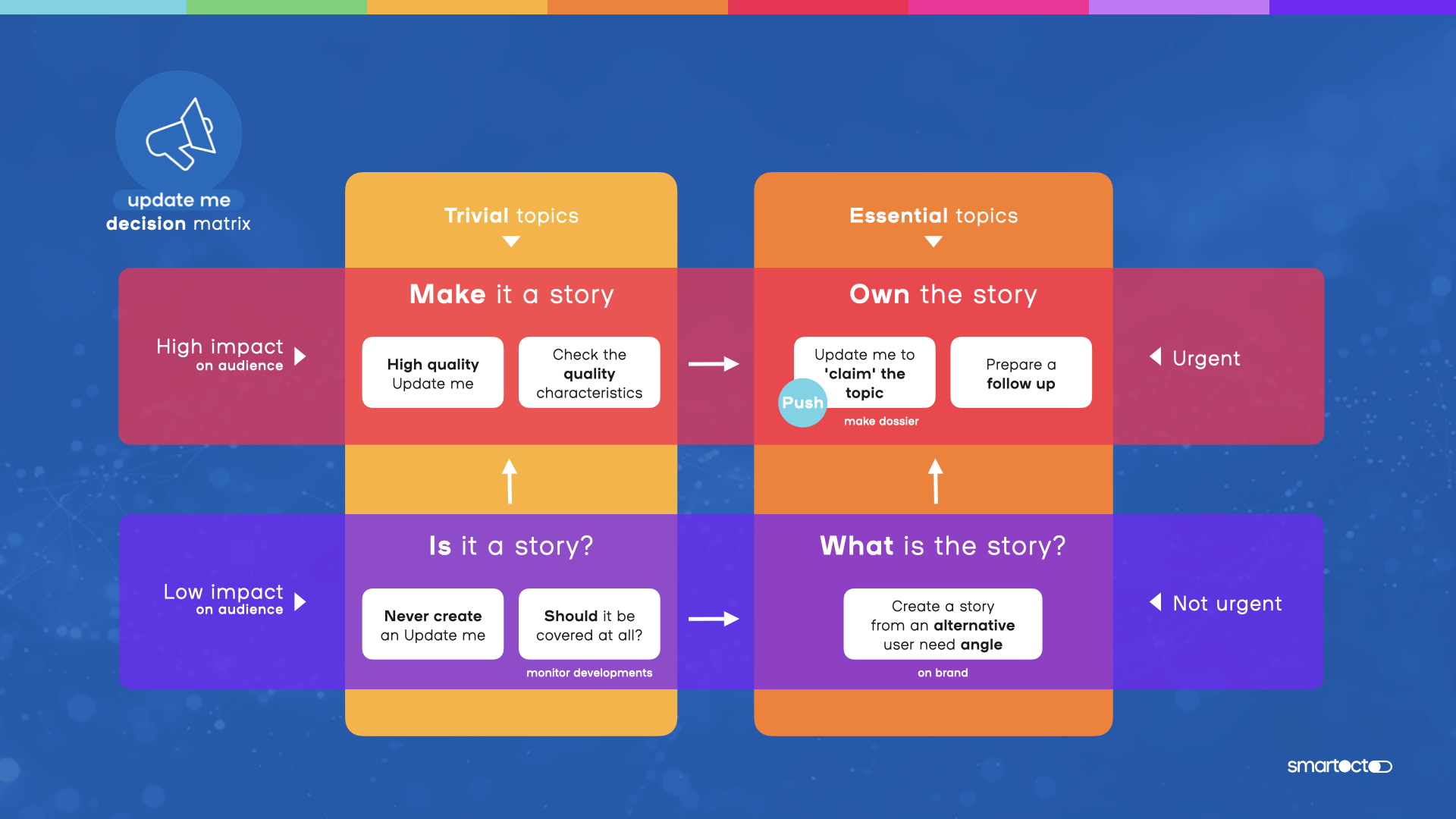
  2. Use a checklist or harness a tool specifically designed for the purpose of helping decide when to write an Update me article - and when not to. Our decision matrix is part of the smartocto toolkit, designed for this exact purpose. Use it.

3. Think about follow up strategies - to keep your audience engaged and on topic (better than producing orphans). Sometimes you’ll want to publish breaking news - but as part of this process you should always think about how to follow that bulletin up later with content that answers unspoken questions. You might want to bring context, additional perspectives or practical guidance or help. Factor all of these things into the planning.

4. Pay attention to notifications (if your analytics tool offers them). Real time feedback will guide you to republish, rewrite or edit further an article - all of which should help improve performance and engagement. Read how Finnish publisher, Turun Sanomat, did that here

5. Utilise editorial analytics reporting. Watch how your stories perform once published. Not only will this help you replicate successful articles, but it will help you decide where NOT to put your resources as well.

6. Always be learning. There’s always new tools, insights and tricks to deploy. We run Labs where we train newsrooms how to do all of this - including ways to monitor, optimise, and sometimes reduce the amount of purely fact-based articles leaving the editorial suite.

This article was first published on the INMA blog, May 2026