Social platforms are sending less and less traffic to news sites, while Google Discover is sending more. Although the impact varies widely depending on your niche and content strategy, publishers should take note. This is a significant development. Here’s what that means.

Shifts in big tech algorithms are reshaping the media landscape. Between 2010 and 2020 many publishers built entire strategies on Facebook referrals, with some seeing more than half of their traffic coming from the platform. Today, we see titles where more than half of all visits arrive via Google Search and Google Discover.

That dependency creates significant concern for some publishers, says Aleksandra Radivojevic, success manager at smartocto. “At some clients’ newsrooms, traffic from Google Search has dropped by as much as 50 percent. Some manage to compensate through projects that attract audiences in other ways, but it’s obviously a difficult situation to navigate.”

Benchmark: steady numbers for Google Search

A previous smartocto benchmark showed that the overall decline in Google Search traffic is less dramatic across our full client base. Over the past three years, the share of visitors arriving after a Google query has remained fairly stable at just under ten percent.
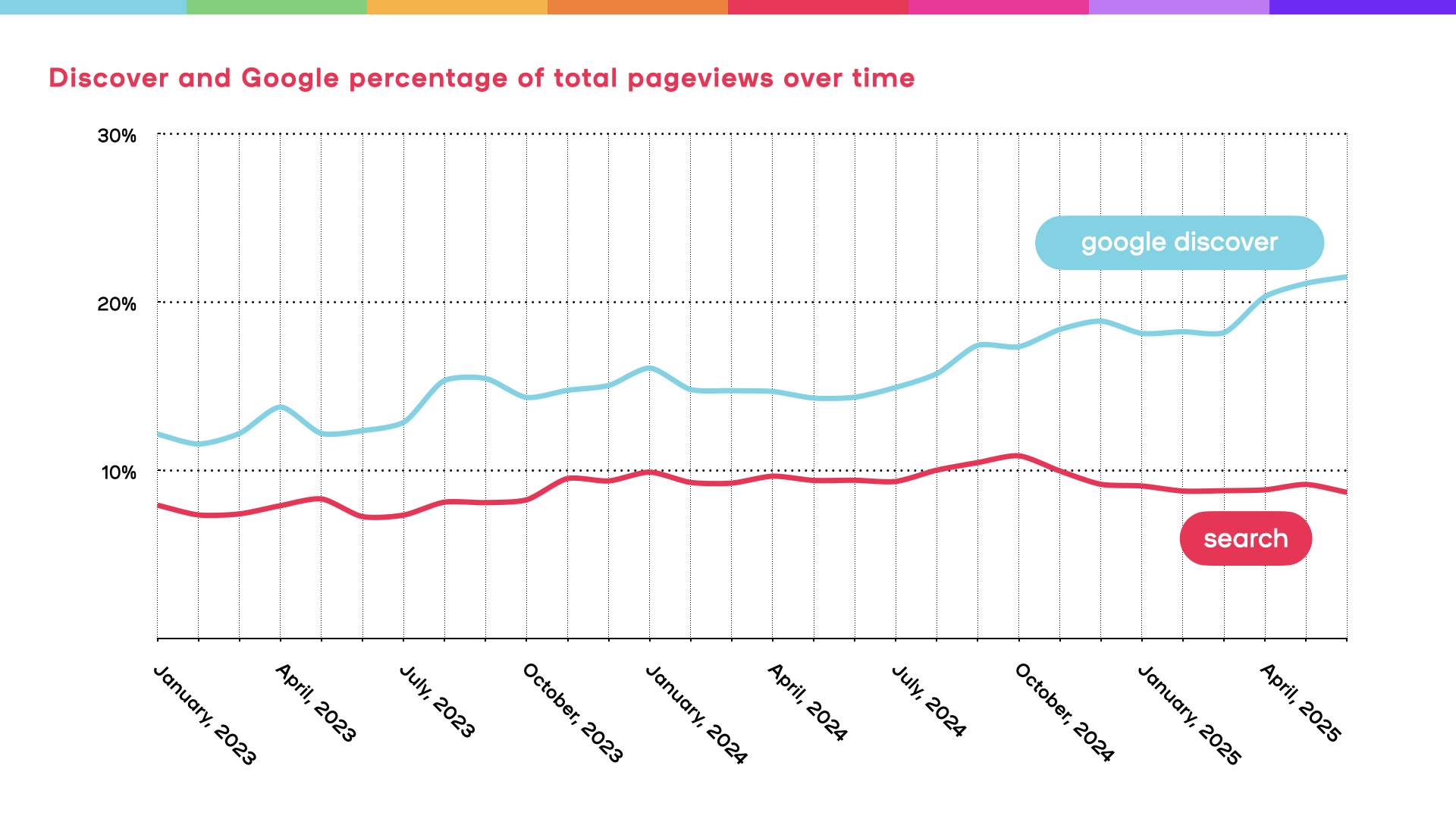
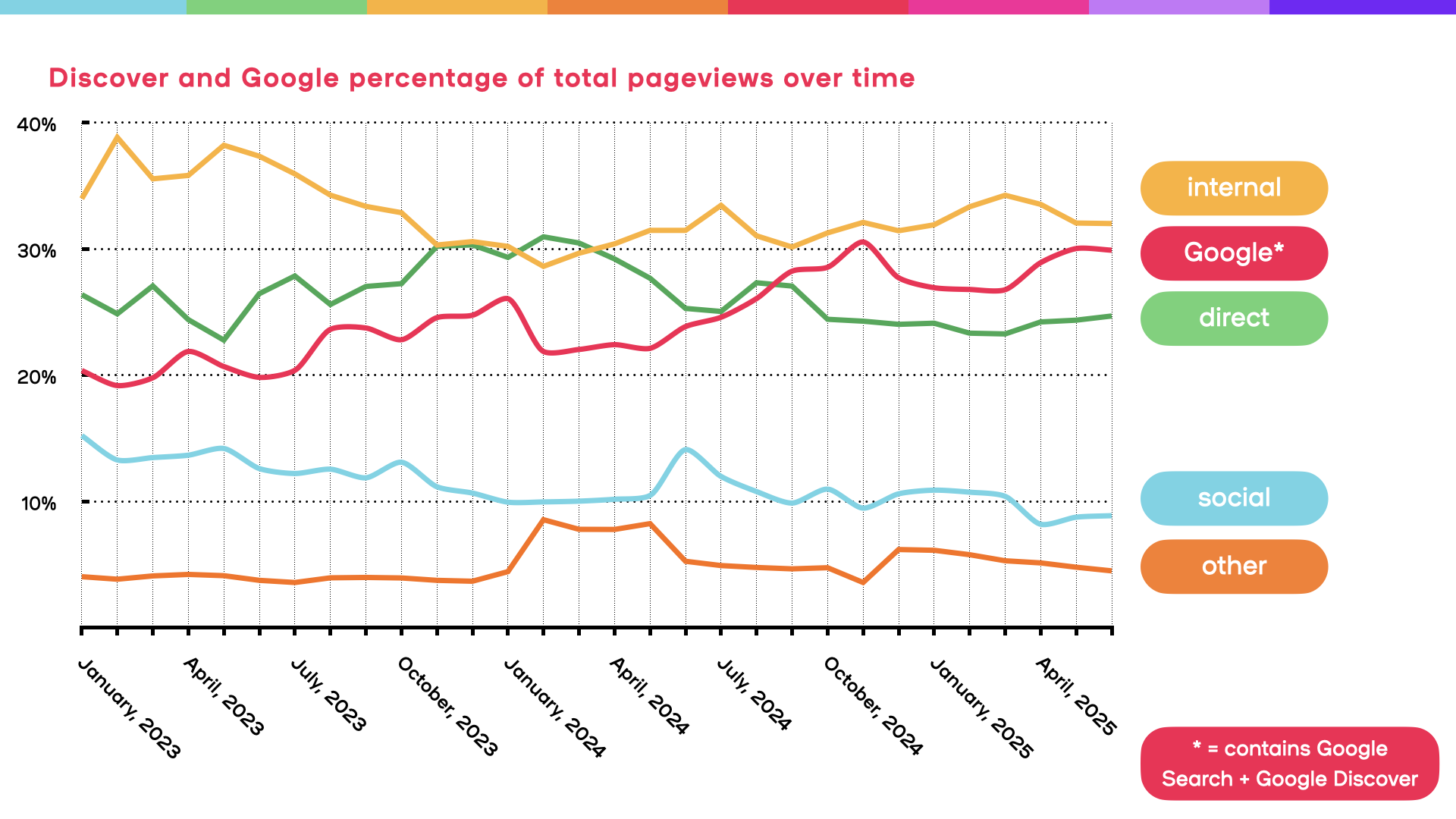
This means that while some platforms are hit hard by algorithmic changes, others see their visibility and traffic increase. An SEO specialist at DPG Media told us this summer that evergreen content and service-driven articles are particularly affected by Google’s AI Overview, which produces summarised answers to the questions that publishers normally address in their stories.

In the chart above, however, one trend stands out: the growing impact of Google Discover. For those unfamiliar with it, Google Discover is the algorithmically assembled list of recommended articles shown on the Google homepage and in the default news feed on Android devices.

Smartocto clients stay steady in overall website traffic

These are percentages, of course, but a check with smartocto’s Data Research Team shows that clients have reported steady performance in recent years. Surveys conducted by the Reuters Institute for the Study of Journalism indicate that news avoidance is widespread, yet on average smartocto clients see a somewhat different pattern.

To give the full picture of the past three years (which we’ll call the post covid period):

• News sites are finding it slightly harder to retain audiences (internal traffic)
• Direct traffic has risen a little, but then dipped again
• Google’s influence is growing sharply thanks to Discover
• Social referral traffic has dropped from roughly 15 percent to below 10 percent
• Other channels have stayed more or less stable

The million dollar question, of course, is what you should do to become more visible in Google Discover. Everyone wants to ride the wave. A contributor from Google News Initiative gave a sobering answer in a recent blog: don’t over-optimise for it. But our strategist does have a few suggestions for the areas where you can make a difference.

Also read this:

Big differences between news sites thanks to Google algorithm

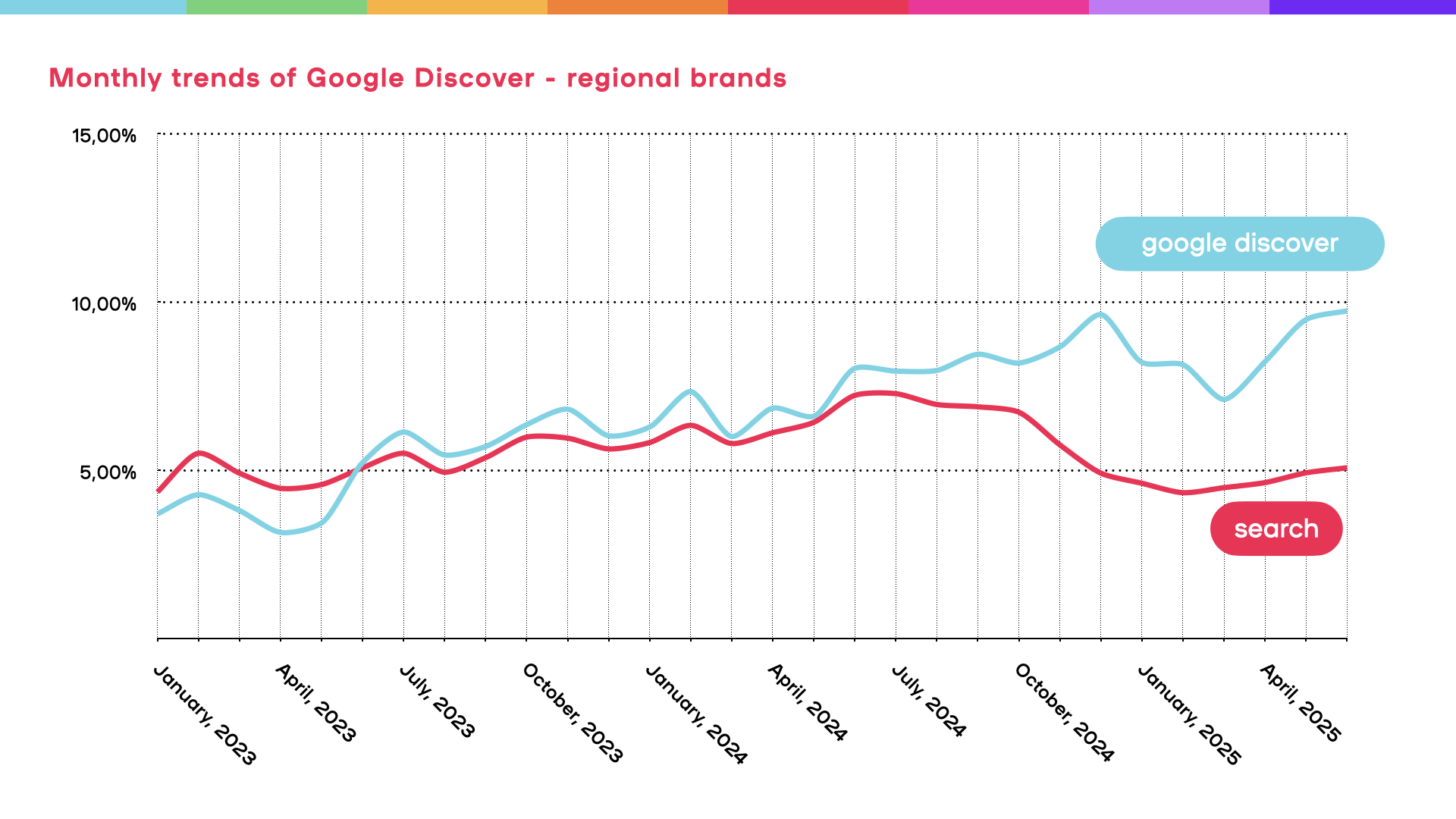
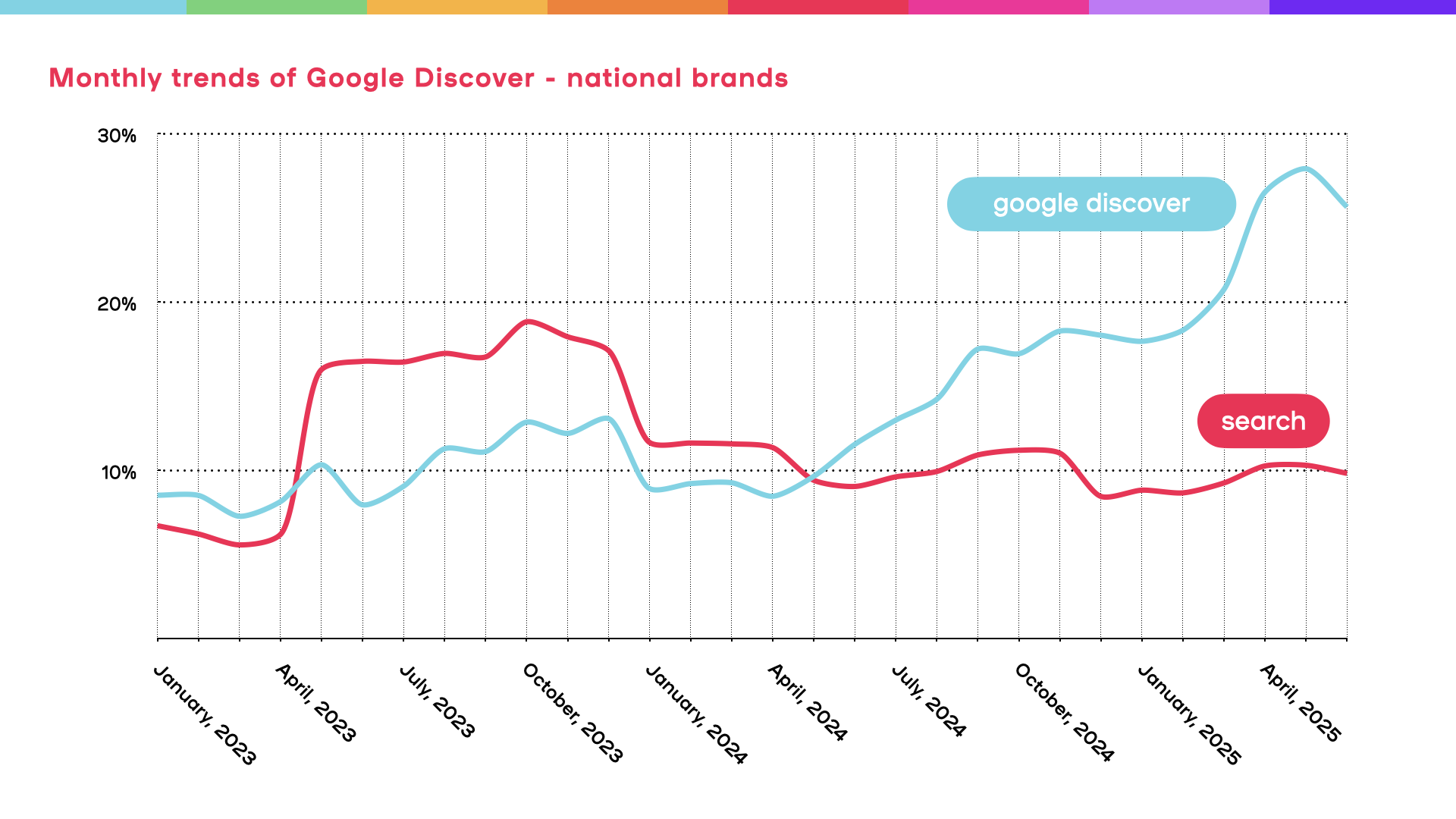
To illustrate how vast the differences are between publishers, without revealing any client specific data, here is a chart of all regional titles and below that the national titles. The fact that the numbers fluctuate so much even within two years shows that Google is constantly tweaking the dials. As folk in the financial sector often say: past performance offers no guarantee for the future success.

If you want help understanding what is happening on your own site, smartocto is your ideal editorial analytics partner. With a decade of experience, we have the expertise to help you interpret your data and shape the dashboards and reports your organisation needs.